


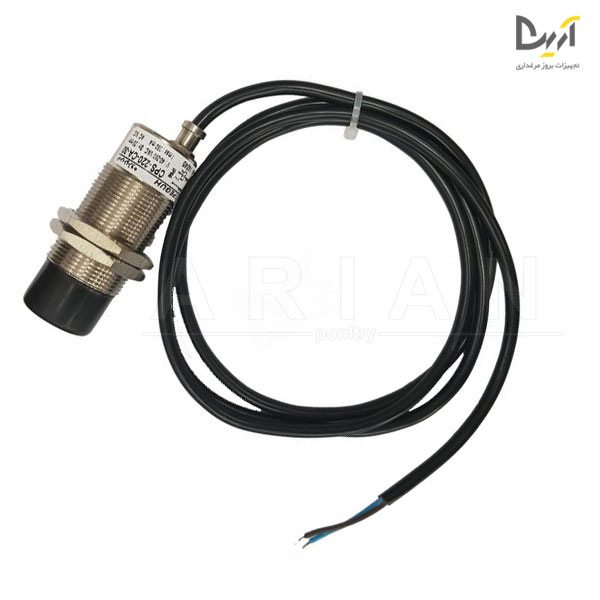
Feed transfer sensor
- Touch operation, two-wire capacitive type with cable output, made in Iran
- Time delay adjustable from 10 seconds to 2 hours
- Operating temperature range: 60 to 20 degrees
- Sensor calibration capability
- Voltage range: VAC 250–20
Description
Feed conveying sensor
The feed transfer sensor is a key component in Automatic poultry feeder, poultry houses and mechanized feeding lines. This sensor plays a vital role in automatically controlling feed flow, preventing overflow or excessive depletion in feeding lines and tanks. The automatic systems used in poultry houses to support bird growth and rearing contain various pieces of equipment. A feed transfer sensor is one of the components required in an automatic system for conveying poultry feed and nutrients. Feeder sensors are usually installed at the ends of poultry feeding lines. A feed transfer sensor (Feed Sensor) is an electronic or electromechanical component that detects the presence or absence of feed at a specific point in the feed transfer system. Its output is sent to the control panel or central controller, allowing the feed transfer gearmotor to be switched on or off. Across industry, capacitive sensors are suitable alternatives to limit switches and microswitches for controlling the level or position of objects and materials. One example, discussed here in greater detail, is the capacitive feeder sensor.
Poultry feeder sensor
One application of capacitive sensors is in poultry houses and feeding systems. They are widely used in feeder hoppers, pan feeders, feed transfer lines and stations. As soon as feed approaches, the sensor opens or closes the circuit, depending on the model purchased. Poultry feeding systems generally use two-wire capacitive sensors with a 30mm diameter, a 220 V.AC supply and NC configuration. When feed touches or approaches the sensor (at 8–20 mm, depending on type), it commands the motor to stop, halting incoming feed and preventing overflow.
Poultry feed transfer sensor purchase and price
For feeder sensor prices, contact Arian Poultry Equipment’s specialists. Arian’s support team is available 24 hours a day to answer your questions and advise you from the design through the implementation of your poultry projects. To purchase a feeder sensor, contact 09123824989 get in touch.
Feed transfer sensor and its features
Sensors are extremely important in systems that deliver feed and food materials. These sensors are used to cut off power and stop the motor. The poultry feed sensor operates once feed has been conveyed throughout the house and has reached the last pan, when the equipment must stop and finish feed delivery. The main reason feed sensors are important in poultry houses is that they let you easily deliver the desired quantity of feed to birds at a specified time and stop distribution whenever it is unnecessary. Another benefit is the adjustable time delay from 10 seconds to 2 hours, one of the most important and notable features of these feed conveying system sensors. Other benefits of using a feed transfer sensor include:
- Reduced electricity consumption through automatic motor shutdown
- Prevents feed waste and environmental contamination
- More uniform feed distribution
- Automating the feeding process
- Extending equipment life by reducing unnecessary operating time
Feeder sensor specifications
- Time delay adjustable from 10 seconds to 2 hours
- Touch operation, two-wire capacitive type with cable output, made in Iran
- Operating temperature range: 60 to 20 degrees
- Voltage range: VAC 250–20
- Sensor calibration capability
Main components of the feed transfer sensor
- Main sensor (optical, mechanical, or capacitive)
- Durable housing (industrial plastic or metal with a moisture-resistant coating)
- Cable or socket for connection to the control panel
- Mounting bracket to position the sensor at the end of the line or in the tank
Sensor applications and functions
- Preventing feed overflow in the feeder
- On/off control of the feed transfer motor
- Automatic control of silo loading
- Ensures poultry food security through uniform feed distribution
Benefits of using a feed transfer sensor
- Reduced electricity consumption through automatic motor shutdown
- Prevents feed waste and environmental contamination
- More uniform feed distribution
- Automating the feeding process
- Extending equipment life by reducing unnecessary operating time
Important considerations when choosing a sensor
- Compatibility with your system voltage
- Resistance to moisture and dust (high IP rating)
- Adjustable sensitivity or detection distance
- Compatibility with feed type (pellet, crumble, mash)
Reviews
There are no reviews yet.