


Poultry ventilation system
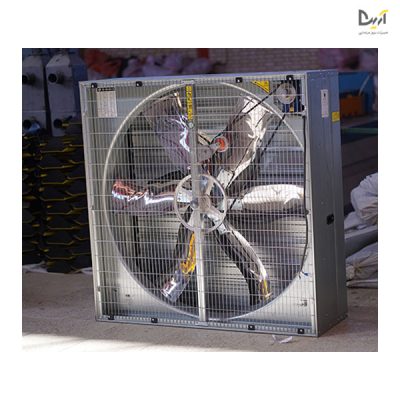
Poultry ventilation system
The ventilation system is an important and inseparable part of a poultry house. Ventilation supplies fresh air, which is essential for the birds’ survival. Proper ventilation also substantially reduces temperature, humidity and air pollution to levels suitable for chicks and birds. A ventilation system is essential in poultry farming; even a few hours without it can cause irreversible harm to the flock and lead to deaths. It is poultry ventilation that makes keeping large numbers of birds indoors possible. Controlling environmental factors such as humidity, temperature, oxygen and carbon dioxide is therefore economically important in both traditional and industrial poultry farming, as it reduces the cost of very large buildings, production and labor. A suitable ventilation system removes excess heat, moisture, dust and odors from the building while reducing airborne disease-causing bacteria. Proper poultry house ventilation is an art because conditions continually change, and ventilation requirements vary with time of day, season, temperature, humidity, wind, bird age and stocking density. Below, we explain ventilation principles and types, poultry house ventilation in winter and summer, tunnel and minimum ventilation, and more.
Ventilation principles
If fresh air is not replaced in a fully enclosed poultry house, the concentrations of air constituents change. Harmful gases such as carbon dioxide and ammonia rise to unacceptable levels. By exchanging fresh air in the house, the ventilation system supplies the oxygen birds need to stay healthy and survive, and removes harmful gases and unpleasant odors caused by respiration and manure decomposition. A ventilation system must be used to remove excess moisture from the building.
Generally, for the purposes of:
Providing the desired temperature
Providing humidity
Supplies the oxygen and air poultry need
Remove foul-smelling and harmful gases from the poultry house
ventilation systems are used. At Arian Manufacturing Industries, we supply customers with fans, cellulose pads, foggers and tunnel ventilation inlet systems (shutters) for ventilation.
Importance of ventilation systems
Importance of maintaining the right temperature in poultry houses:
The main purpose of poultry house ventilation is temperature control. At each stage of growth, birds need a suitable temperature range to convert feed energy into growth with maximum efficiency.
Bird type
Age (weeks)
House temperature (°C)
Chicken chick
1
31–33
Chicken chick
2
28–30
Chicken chick
3
24–27
Chicken chick
4
21–23
Chicken chick
5
20–22
Chicken chick
6
18–20
Chicken chick
7
18–20
Chicken chick
8
18–20
Grower birds
8 to 22 weeks of age
15–18
Laying hen
Over 22 weeks old
15–18
Importance of maintaining humidity in poultry houses:
Birds also release moisture through droppings and respiration, wetting litter and causing numerous problems. One important objective of poultry-house ventilation, especially in winter, is to remove excess moisture and prevent caked, wet litter. During part of the year, particularly the cold season, minimum ventilation is essential to prevent wet litter and problems associated with ammonia buildup, which causes many difficulties in poultry houses.
The importance of supplying enough oxygen in poultry farms:
Birds are aerobic organisms and need oxygen to digest feed and absorb its energy, so their oxygen consumption is high. They must therefore always have fresh, pleasant air with enough oxygen. This means they need sufficient oxygen to break down organic molecules in feed and extract their energy. Regularly supplying fresh air is therefore an important ventilation objective for providing the oxygen needed in poultry houses.
Importance of removing toxic gases from poultry houses:
Another purpose of poultry ventilation is to supply fresh air and remove harmful gases, especially carbon dioxide and ammonia. Carbon dioxide is produced by birds’ respiration, causing its concentration to rise inside the poultry house. Ammonia is released from high-moisture litter, damaging the flock and reducing performance. These gases severely impair birds’ performance and growth mechanisms and cause damage and heavy losses. Removing them from the poultry house is therefore essential.
Poultry house ventilation in winter
Ventilating poultry houses in winter is very important. Remember that the volume of air entering the house in winter is lower than in warmer seasons such as summer or spring because outdoor air is cold. You can easily review winter ventilation rates in the table below.
Poultry house ventilation in summer
Just as low temperatures harm poultry, high temperatures also endanger their health. Poultry houses use various exhaust fans to ventilate and reduce temperature, preventing it from rising. Keep in mind that a pad cooling system alone is not enough; exhaust fans must also be used to ventilate poultry houses in summer. In fact, exhaust fans create negative pressure, and air entering through these pads is cooled, reducing the temperature inside poultry houses during the hot season.
Types of poultry ventilation
Poultry houses can be ventilated in several ways, each explained below:
Cross ventilation of poultry houses: In a cross-ventilation system, all fans and exhaust fans are installed on the poultry house’s long sidewalls, ventilating across its width. Cross ventilation is suitable for houses 8 to 12 meters wide; wider houses will not be fully ventilated. Fans must not be installed directly opposite one another in cross ventilation, as this creates dead zones where air is not exchanged and prevents uniform temperature control throughout the house. Under these conditions, birds may gather and crowd in different parts of the house.
Longitudinal poultry house ventilation: In longitudinal poultry house ventilation, inlets are installed at the end of a long sidewall and exhaust fans at the opposite end across the house. Air thus flows along the length of the house. In longitudinal ventilation design, the distance between fans and inlets must not exceed 60 m. In some cases, longitudinal and cross ventilation are combined.
Roof ventilation for poultry houses: In roof ventilation, as the name suggests, fans and vents are installed in the house roof. Since warm air inside the house rises, this method maintains airflow from bottom to top, thereby providing ventilation. Roof ventilation is suitable for houses wider than 12 meters and those located in very cold or very hot regions.
Poultry house floor ventilation: In this system, channels are first formed in the house floor, with openings above them. Mesh covers these openings, and exhaust fans are installed at the end of the channels. Floor ventilation can be implemented in all types of houses and climates. It ventilates the house by drawing air from floor level and exhausting it through the channels. To improve the effectiveness of floor ventilation, openings are positioned beneath feeders and drinkers, where birds tend to gather.
Arian Manufacturing Industries ventilation system equipment
1. Ventilation fan:
Exhaust fans are essential for efficient poultry-farm operation: they improve efficiency and productivity in poultry farms and broiler-rearing facilities while helping reduce poultry maintenance costs. These fans are manufactured by Arian Manufacturing Industries. One of their most prominent advantages is a centrifugal damper-opening system, which requires no external force to hold the damper open. The centrifugal force generated by weights within the system opens the damper once the impeller reaches 90 revolutions per minute.
2. Cellulose pad:
Cellulose cooling pads are among Arian Manufacturing Industries’ poultry ventilation products. They are used in hot seasons to cool the house, supply relative humidity and prevent heat stress in the flock. In humid regions they can reduce house temperature by up to 10°C; in dry regions the reduction is much greater, reaching up to 16°C.
3. Fogger:
The misting system consists of a high-pressure pump and several nozzles (foggers) that turn water into millions of particles smaller than a human hair, measuring 5–15 microns. These tiny droplets evaporate rapidly on contact with air, cooling the house and increasing unsaturated humidity.
4. Tunnel ventilation inlet system (shutter):
Tunnel ventilation inlet shutters are used to regulate the amount of air entering the house through tunnel ventilation and direct it toward the ceiling. Tunnel ventilation is used mainly in regions with high air temperatures. Fans are installed on one end wall and air inlets on the opposite end wall. A benefit of tunnel ventilation is the movement of dusty, humid air at 4.2 meters per second, circulating air among the birds and cooling them. Given the inlet air angle and the accumulation of warm air at the top of the house near the ceiling, shutters can create ideal poultry-house conditions by equalizing the air and directing it toward the ceiling. Shutters are generally used during warmer seasons and are therefore also called summer ventilation inlets.
1. Minimum ventilation (Ainimum / winter ventilation):
In minimum ventilation, used in cold weather or at the start of the rearing cycle, the main goal is to bring fresh air into the poultry house and remove excess moisture, harmful gases (carbon dioxide, ammonia, etc.) and dust with the lowest possible ventilation rate. In this type of ventilation, incoming air must not strike the birds directly.
2. Transitional ventilation (Intermediate / transition ventilation):
Transitional ventilation begins as birds get larger and the outdoor air gets warmer. The indoor temperature must not rise, and excess heat needs to be removed from the poultry house.
3. Tunnel ventilation (Tunnel ventilation):
In tunnel ventilation, tunnel fans are located at one end of the poultry house and tunnel air inlets at the other. Tunnel ventilation is mainly used in hot weather, when a suitable airflow speed must be created in addition to air exchange.
Broiler litter management
Poor litter management increases ammonia in the house, requiring more ventilation to remove the excess.
More fuel is consumed to heat the house: up to 2% more
Wet litter caused by improper ventilation and poor poultry-house drinker management
an imbalance in the nutrients in the chicks’ ration (sodium and amino acids) and high flock density. When cold air enters a house containing warm, humid air, droplets form. One of the main goals of ventilation in cold weather is to remove litter moisture resulting from droppings. Since cold air has a lower capacity to hold water (moisture), it cannot remove enough moisture from the litter, which gradually becomes excessively wet.
All types of poultry ventilation equipment available or manufactured at Arian Manufacturing Industries are of the highest quality. You can confidently entrust the complete equipping of your poultry house and rearing project, from start to finish, to Arian Manufacturing Industries.